

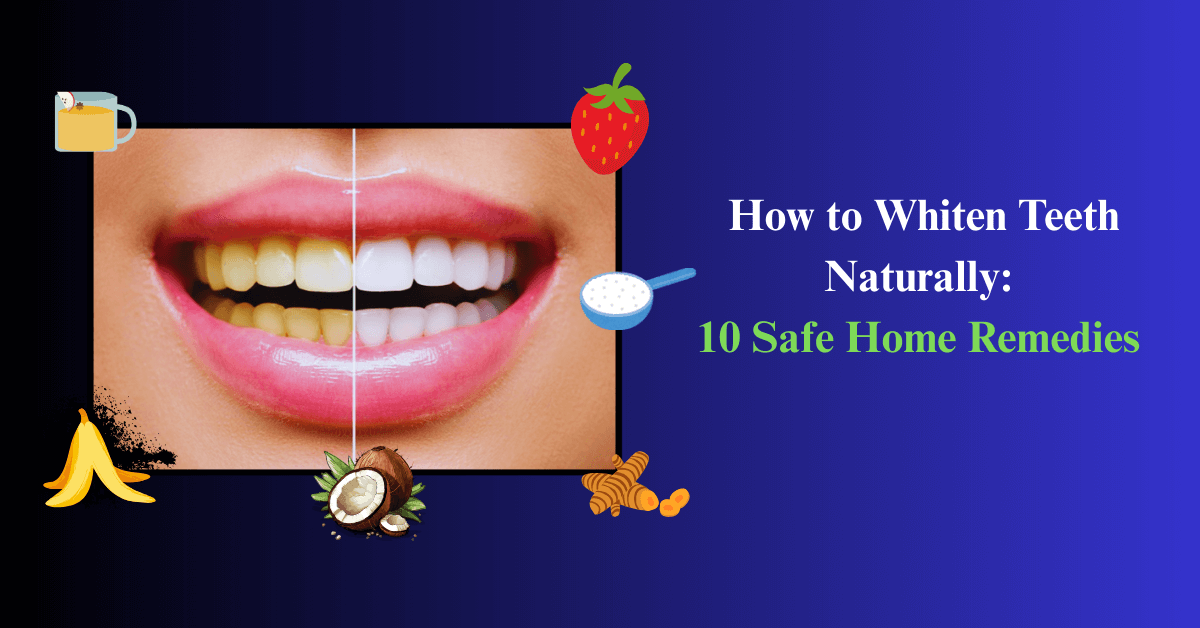
A bright, white smile can boost confidence and leave a lasting impression. While professional teeth whitening treatments can be expensive, there are safe and effective natural remedies you can try at home.
How to whiten teeth naturally? 🤔 Well, I’ll share 10 home remedies to whiten your teeth at home.
Before we dive into natural whitening methods, let’s understand why teeth turn yellow.
Table of Contents
Why Do Teeth Turn Yellow?
Understanding the root cause of discoloration helps you choose the most effective whitening method.
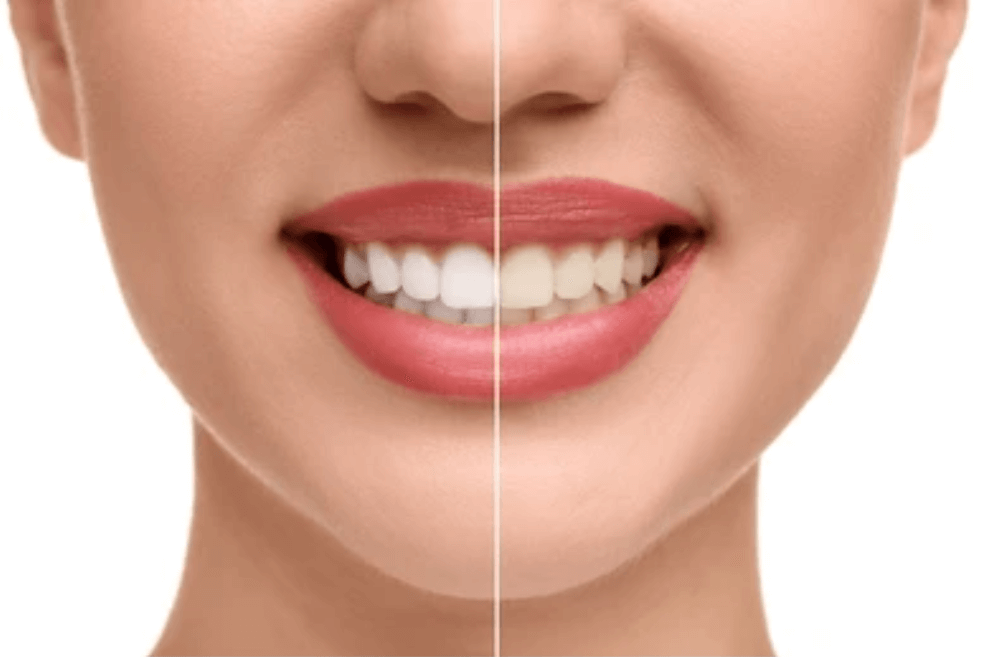
1. Food & Drink Stains
Certain foods and beverages contain pigments called chromogens that bind to enamel:
- Coffee
- Tea
- Red wine
- Chocolates
- Tomato sauces
- Soda and sports drinks
- Dark berries, etc
If consumed frequently, these foods gradually stain the enamel.

2. Poor Oral Hygiene
Inconsistent brushing, flossing, or improperly cleaning the tongue allows plaque and tartar to accumulate.
Plaque is soft and yellowish, while tartar hardens into a more stubborn, darker stain.
3. Aging
As we age, the enamel layer becomes thinner.
This makes the underlying dentin — naturally yellow — more visible.
4. Genetics
Some people have naturally thicker or thinner enamel layers or more yellowish dentin.
Natural remedies still help, but results may vary.
5. Smoking or Tobacco
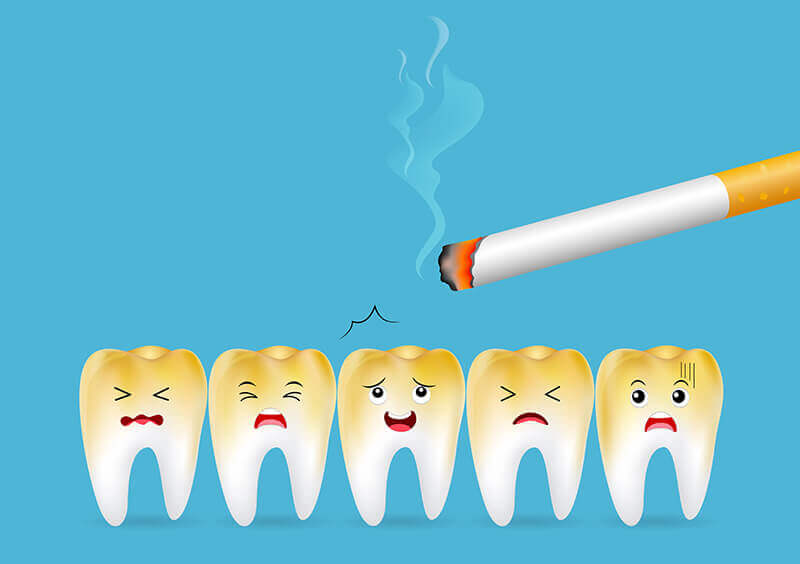
Nicotine and tar penetrate deeply into enamel pores causing:
- Brown patches
- Dark yellow stains
- Bad breath
- Gum discoloration
These stains are often harder to remove naturally but can still lighten with consistent care.
6. Medications & Medical Conditions
Certain antibiotics, chemotherapy, radiation, and childhood medication exposure can affect tooth color.
How to Whiten Teeth Naturally: 10 Natural Remedies
Below are the top 10 natural whitening remedies that work without harsh chemicals. Also, they are dentist-approved and safe to use.
1. Baking Soda & Water Paste
Baking soda’s mild abrasiveness helps remove surface stains without scratching enamel.
It also creates an alkaline environment that prevents bacteria growth.
How to Use:
- Mix 1 teaspoon baking soda with water to form a paste.
- Brush gently for 1–2 minutes.
- Rinse thoroughly.
- Use 2–3 times weekly (not daily).
Why It Works:
- Lifts stains mechanically
- Reduces plaque
- Neutralizes acids in the mouth
2. Oil Pulling
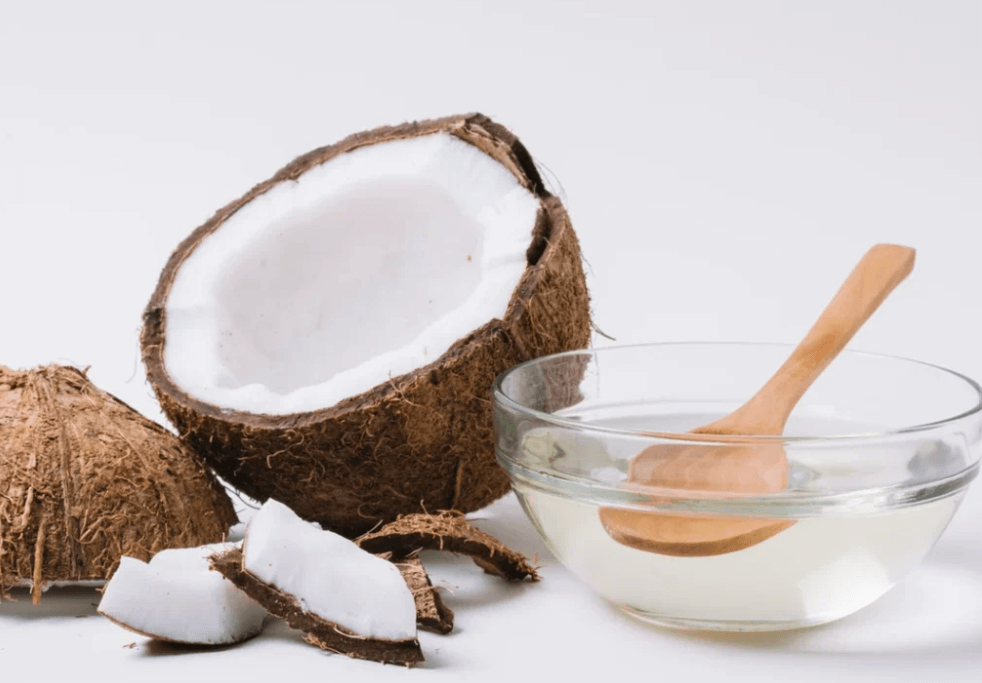
Oil pulling is an ancient Ayurvedic technique known for improving oral hygiene.
How to Use:
- Swish 1 tablespoon coconut oil in your mouth for 10–15 minutes.
- Spit it out (never swallow).
- Rinse and brush afterward.
- Do daily or at least 3–4 times per week.
Benefits:
- Removes bacteria
- Reduces plaque
- Prevents bad breath
- Helps gums stay healthy
It may not bleach teeth dramatically, but it boosts natural whiteness by preventing buildup.
3. Hydrogen Peroxide (Diluted Only)
Hydrogen peroxide is a natural bleaching agent — but must be used safely.
How to Use:
- Mix equal parts 3% hydrogen peroxide + water.
- Swish for 30–60 seconds.
- Rinse well.
Avoid:
- Using it undiluted
- Using too often
- Brushing with straight peroxide
Use Frequency:
2–3 times per week.
4. Activated Charcoal
Activated charcoal binds to particles and helps lift stubborn stains.
How to Use:
- Dip a wet toothbrush in charcoal powder.
- Brush in gentle circles for 1 minute.
- Rinse very well.
- Use once weekly to avoid enamel damage.
Pros:
- Quick visible results
- Removes plaque and toxins
Cons:
- Overuse = enamel wear
5. Apple Cider Vinegar (Diluted Rinse Only)
ACV contains natural acids that help break down stains — but too much can erode enamel.
Safe Method:
- Add 1 tbsp ACV to 1 cup water.
- Rinse for 30 seconds.
- Rinse again with water.
Use only 1–2 times per week.
6. Turmeric Whitening Paste
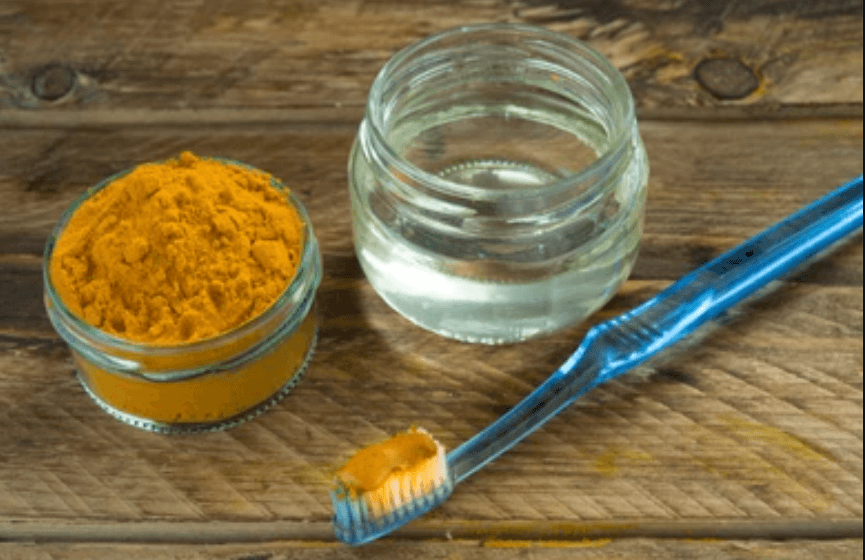
Turmeric has anti-inflammatory and antibacterial properties.
How to Use:
- Mix 1 teaspoon turmeric with coconut oil.
- Brush gently for 1–2 minutes.
It might temporarily stain your brush — but not your teeth.
7. Strawberry + Baking Soda Whitening Mask
Strawberries contain malic acid, which helps dissolve surface stains.
How to Use:
- Mash 1 ripe strawberry.
- Mix with ½ teaspoon baking soda.
- Apply to teeth for 1–2 minutes.
- Rinse thoroughly.
Use once per week.
8. Banana Peel Rub

Banana peels contain minerals like potassium and magnesium that help polish enamel.
How to Use:
- Rub the inside of a ripe banana peel on teeth for 1 minute.
- Brush afterward.
This is mild but safe.
9. DIY Natural Whitening Toothpaste
This combines the effects of gentle abrasion + antibacterial benefits.
Recipe:
- 2 tbsp coconut oil
- 1 tbsp baking soda
- 4–5 drops mint essential oil (optional)
Use 2–3 times weekly.
10. Eat Teeth-Cleaning Foods Daily
Some foods naturally clean your teeth while you chew:
- Apples
- Celery
- Carrots
- Almonds
- Cheese
- Yogurt
These increase saliva, reduce bacteria, and prevent staining.
General Results Timeline for Teeth Whitening
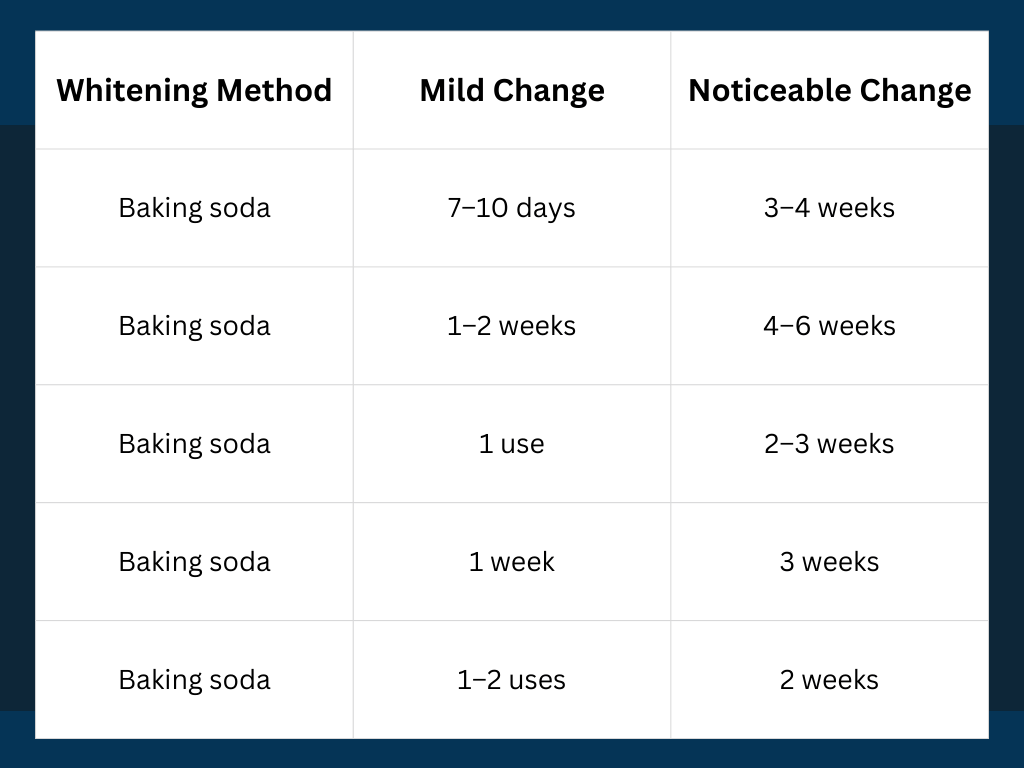
Natural methods work gradually — consistency = results.
What NOT to Use: Dangerous Whitening Hacks to Avoid
While it’s tempting to try quick fixes for a whiter smile, some home remedies can actually damage your teeth and gums. Avoid the following:
- Undiluted Hydrogen Peroxide – Using strong concentrations can burn your gums, irritate your mouth, and erode enamel.
- Lemon Juice or Citrus Juice Alone – High acidity can weaken enamel, making teeth more prone to decay.
- Baking Soda Every Day – Overuse is abrasive and can wear down enamel over time.
- Activated Charcoal Excessively – While it removes surface stains, frequent use can scratch enamel and increase sensitivity.
- DIY Bleaching Kits Without Guidance – Over-the-counter or homemade bleach solutions can be dangerous if misused.
- Abrasive Household Items – Toothpaste alternatives like salt, ash, or even charcoal from fire can damage enamel and gums.
Rule of Thumb: Natural or chemical whitening should be used in moderation and with proper guidance. For safe and effective whitening, it’s always best to combine home remedies with good oral hygiene and, if needed, professional dental care.
Dentist-Approved Tips for Long-Term Teeth Whitening
- Occasional Whitening Touch-Ups – Maintain brightness safely.
- Brush & Floss Daily – Keeps plaque and stains at bay.
- Rinse After Staining Foods – Coffee, tea, and wine can discolor teeth.
- Eat Crunchy, Teeth-Friendly Foods – Apples, carrots, and cheese help clean and strengthen enamel.
- Avoid Tobacco – Prevents stubborn stains and oral health issues.
- Use a Straw – Reduces contact of staining drinks with teeth.
- Limit Acidic & Sugary Foods – Protects enamel and prevents yellowing.
- Regular Dental Checkups – Regular professional cleanings remove deep stains.
When to See a Dentist Instead of Whitening at Home
While home remedies can help with mild staining, it’s important to seek professional care if you experience:
- Significant tooth sensitivity
- Deep brown or gray stains
- Enamel erosion
- Bleeding gums
- Severe tartar buildup
- Pain while brushing
For safe and effective treatment, visit Teeth Saver’s Dental Chamber. Our experts can assess your oral health and recommend the best whitening or treatment plan.
📞 Want to book a consultation?
👉 Click here to contact us on WhatsApp
📍 Visit us today at Multiplan Green Villa, 61, Green Road, Dhaka-1205, Bangladesh.
Take the first step toward a brighter, healthier smile with Teeth Saver’s.
Leave A Comment